Hashim Samiru Made the Jacket Swae Lee Wore at the World Cup
By Grugbox ·
 Grugbox Media
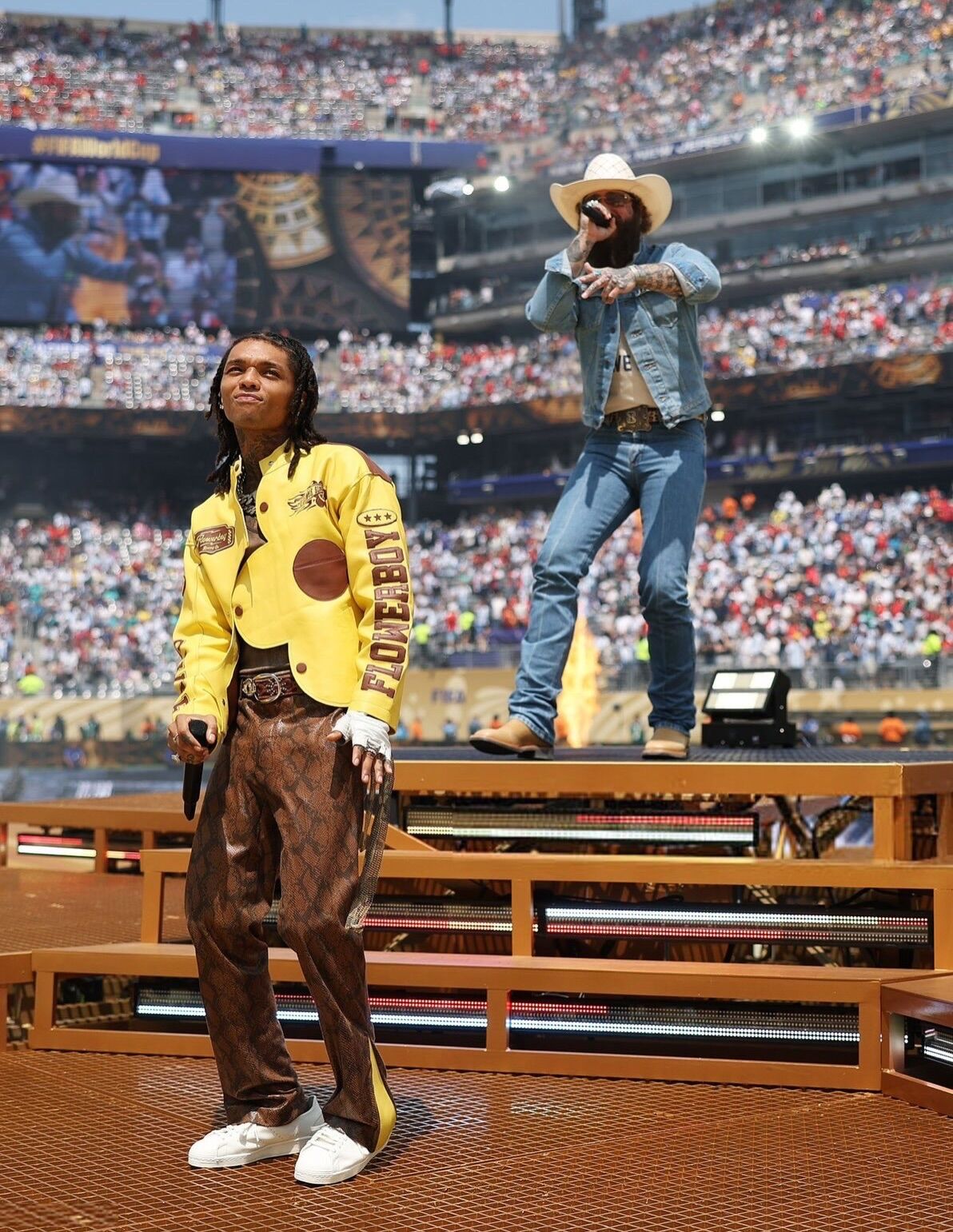
Eighty thousand fans filled MetLife Stadium for the 2026 FIFA World Cup. On the temporary stage over the turf, Post Malone performed in double denim and a Stetson. Beside him, the American rapper Swae Lee wore a custom "Flower Boy" leather jacket made by the Accra designer Hashim Samiru, and the look made headlines worldwide.
Samiru designed and produced the jacket in Accra. Stadium performers usually get their clothes from European fashion houses and North American showrooms.
Screenshots of the performance circulated for days afterwards, with people zooming in on the brown collar patch and the "FLOWERBOY" lettering stitched along the sleeve. Swae Lee's stylist, Miranda Monroe, pulled the piece for the broadcast, which put an independent West African label on the most watched sporting broadcast in the world.
How the Flower Boy jacket is built
Samiru goes by @_hasheeem online. He has made garments under his label, Hashim, for several years. His store at shophashim.com sells reflective nylon tracksuits, racer beanies, and knit tote bags. The bespoke leather is a different line of work.
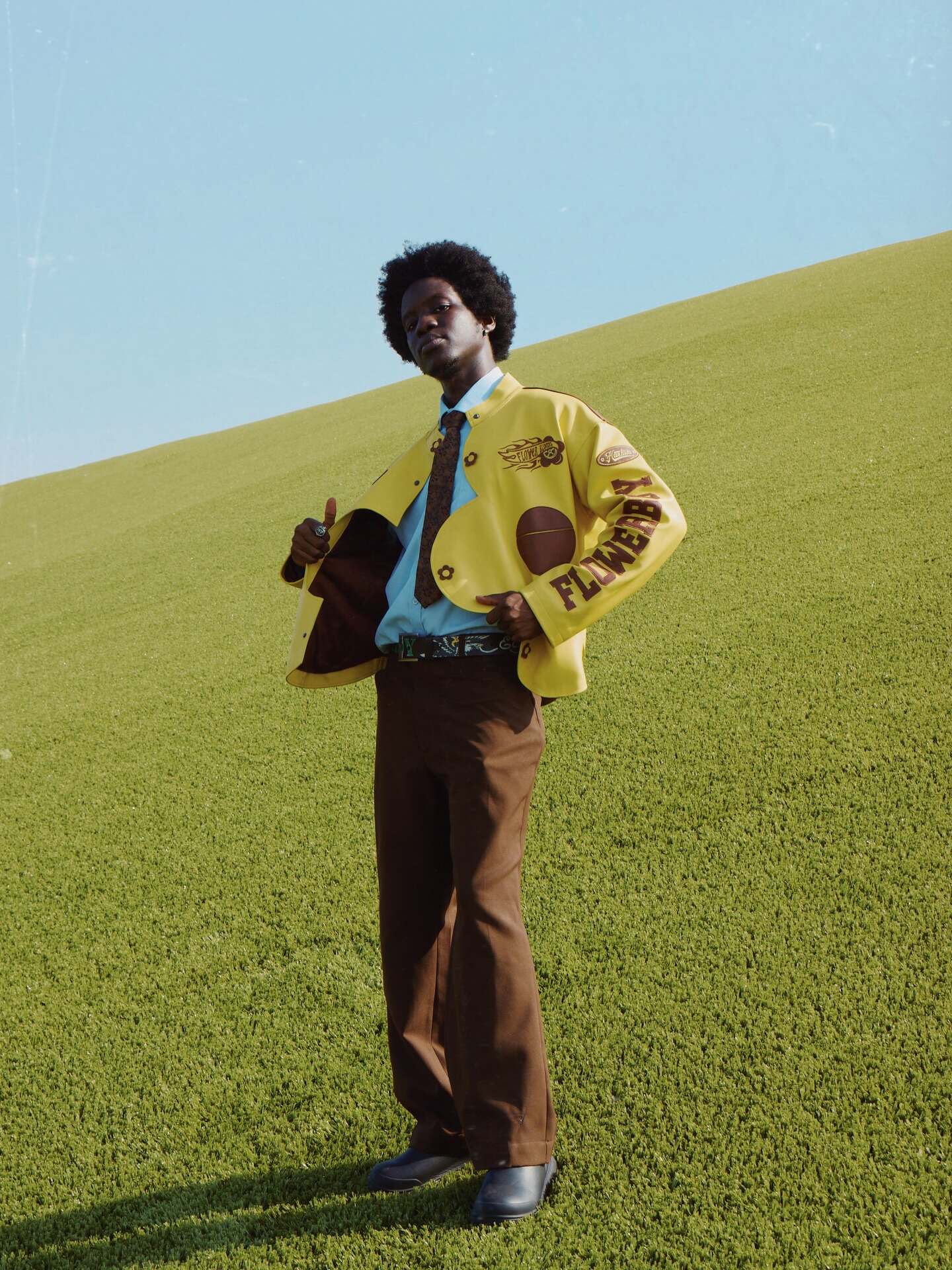
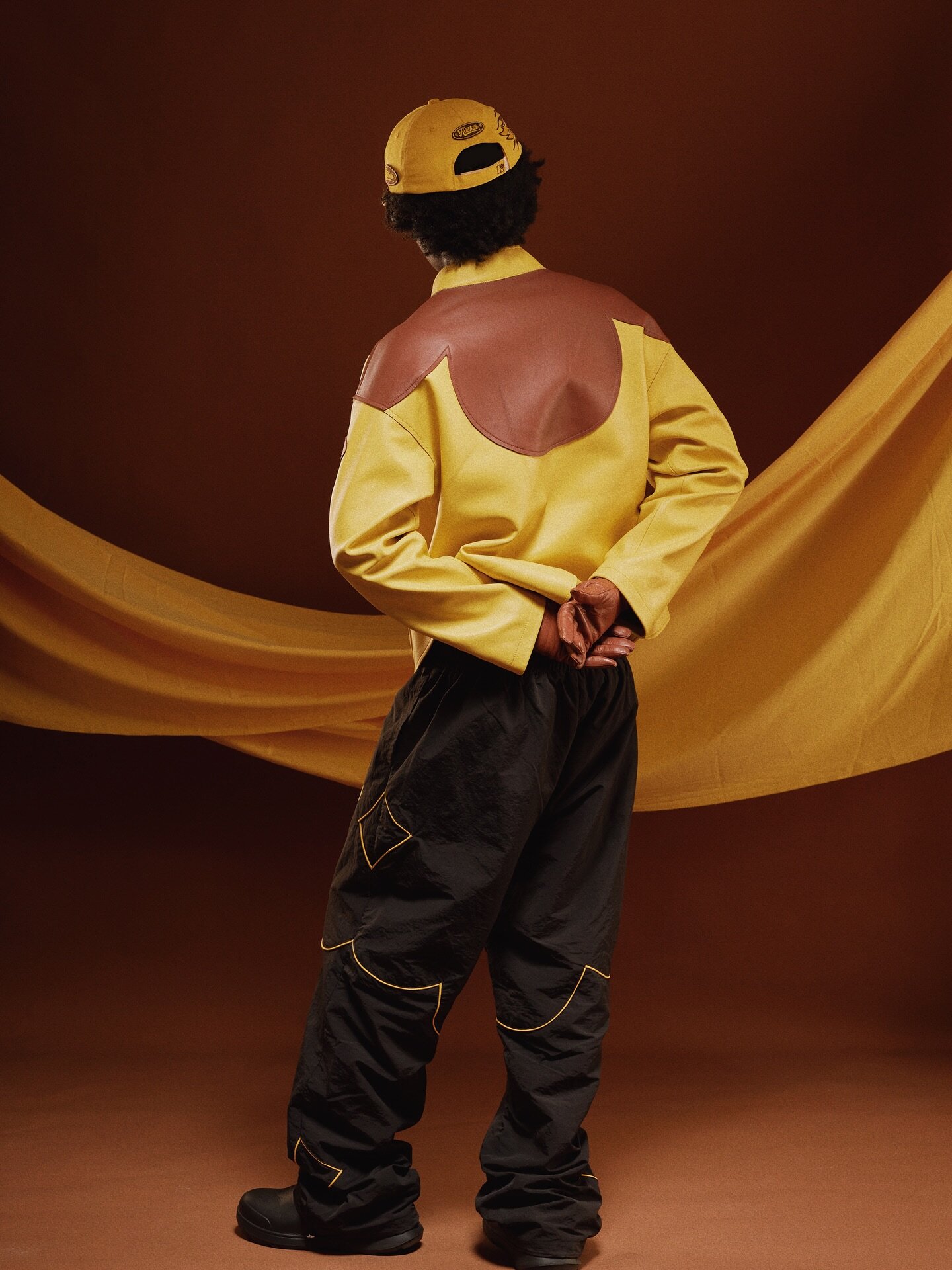
The Flower Boy jacket is built from heavy cowhide in mustard yellow and chocolate brown. The front panel curves into petal shapes anchored by a round brown leather medallion and two front buttons. On the back, a scalloped leather yoke spreads across the shoulders.
The cut borrows from vintage motorsport leathers, with floral shapes taken from the flowers his mother kept around the house. Dense hide is slow work: needles snap on thick seams, and the pattern pieces are measured and cut by hand. The finished jacket is heavy, and it holds its shape on a hanger.
Reversing the trade route
Accra's relationship with global fashion has mostly run one way, as an importer.
Every week, shipping containers of secondhand clothing arrive at Tema harbor and feed directly into the lanes of Kantamanto market. For decades, young Ghanaians interested in streetwear built reputations by thrifting, combing through bales of imported workwear, military jackets, and vintage graphic tees. That trade taught a generation how garments are constructed and which fabrics hold up.
Designers like Samiru work the other direction, making original silhouettes in Ghana and selling them abroad.
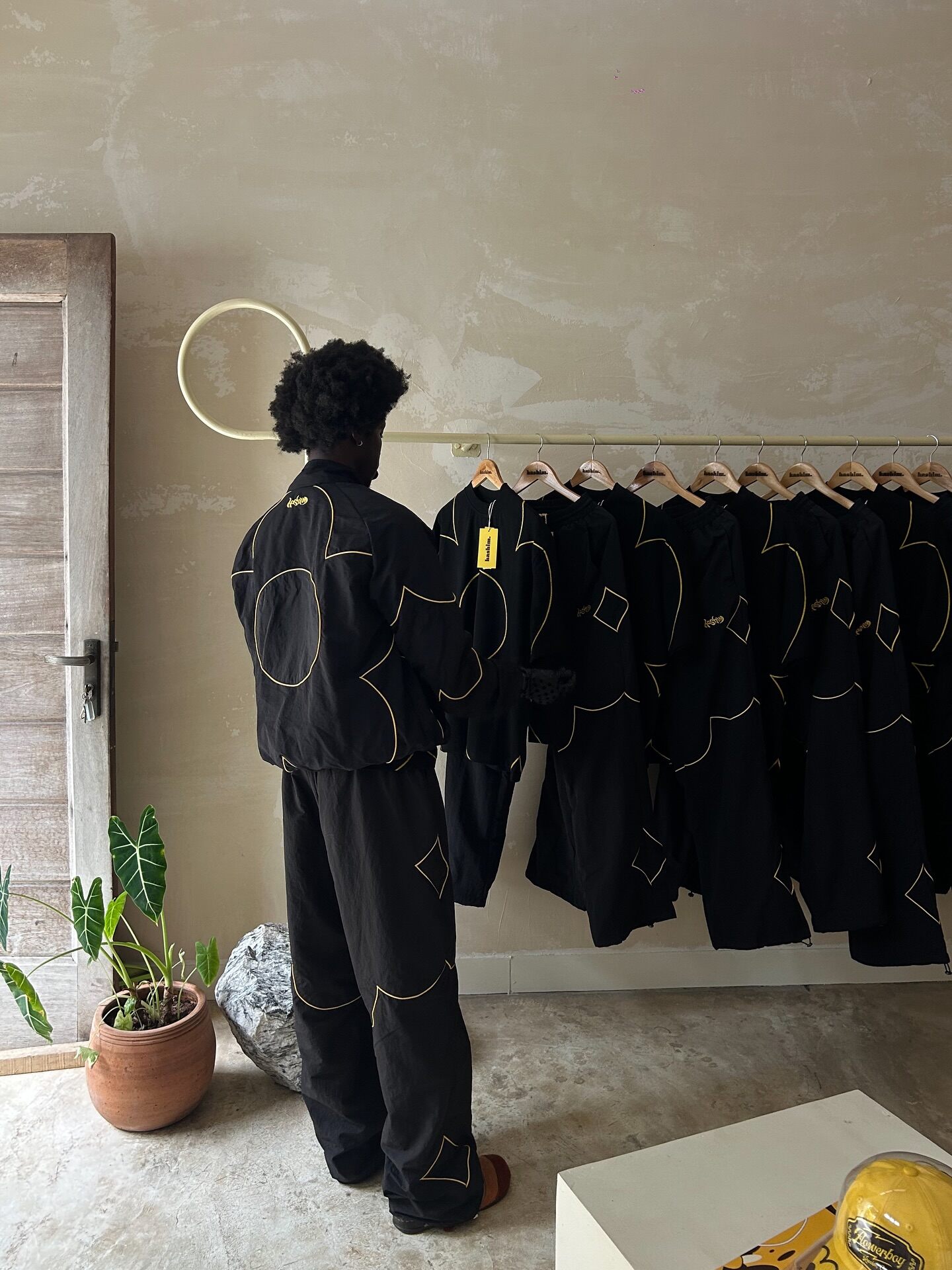
The workroom shows where his attention goes. Racks hold black technical tracksuits with contrast stitching that outlines petal shapes across the chest and legs. He treats Ghanaian streetwear as a manufacturing discipline, keeping close watch on pattern cutting and panel proportions. The fits are relaxed, the pockets stay functional, and the type is custom.
The limits of a cosign
A placement like that brings immediate visibility. It does not fix the problems Ghanaian labels run into every week.
When an artist with Swae Lee's reach wears an independent piece, follower counts climb and the direct messages fill up with sizing questions. Keeping a label going takes reliable leather and production timelines you can plan around.
In Accra, running a studio means managing constant logistical disruption. Power outages stop the sewing machines. Local leather merchants get irregular supplies of quality hides, so designers source across borders. Imported zippers and lining fabrics change price from week to week as the exchange rate moves.
Shipping has its own friction. Courier rates for heavy leather from Accra to North America or Europe can rival what the garment cost to make. At home, buyers measure bespoke pieces against mass-market fast fashion and hesitate at what small-batch tailoring has to charge.
Which is roughly why a celebrity cosign often stays a single promotional moment instead of turning into steady business.
Working on his own schedule
Samiru works around the conditions by keeping distribution tight. He sells through shophashim.com and posts updates on Twitter at @_hasheem, releasing small quantities when he is ready rather than on the European fashion calendar.
The jacket looked at home on that stage, which is why people noticed it. The cut and the weight of the leather show what an Accra workshop can do.
A lasting Ghanaian presence in global fashion depends on designers who know their machines and keep control of their own production.